pctechguide.com

  • Home
  • Guides
  • Tutorials
  • Articles
  • Reviews
  • Glossary
  • Contact

Technical guide to the Intel Penryn Core 2 Processor

The Penryn CPU is another in Intel’s line of Core 2 processors and the first fabricated using its 45nm die technology. The processors replace the ‘Merom’ range of processors, the and dual- and quad-core versions catering for the differing requirements of consumer machines.
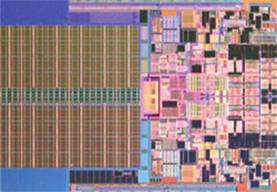
The Penryn is based on the same core architecture as the current Core 2 implementations but fabricated on a smaller 45nm die using Intel’s innovative ‘high-k’ gate dielectrics and metal gate electrodes, meaning increased transistor density, increased transistor switching speed, and reduced power.

Smaller transistor sizes have many benefits, not least of which is they can squeeze more chips out of a single silicon wafer (and more chips = more profit). The main technological benefit here is that more transistors can be squeezed onto the same size chip with the corollary of this being that more processor work can be done in one unit time.

This technology advanced Intel’s manufacturing processes significantly ahead of those used in fabrication of the original Core 2 processors. It provided potential to once again start scaling manufacturing sizes down and, most importantly, it represented a massive leap ahead of Intel’s competitors.

As an indication of the increased density available to designers, consider this: the Intel Core Quad processors harboured 582 million transistors while Penryn quad-core implementations have 820 million on smaller die. This (massively) increased transistor count is partially explained by the 6MB of level 2 cache per core, 150% of that offered by the original Core 2.

Other advances

The Penryn utilizes a new, faster divider which processes four bits per clock cycle rather than the two processed by Conroe chips. This offers divide operations twice the speed while the speed of square root operations increase four-fold. Such advances, though producing marked overall performance increases, may be limited to very specific applications.

Furthering its bid to reduce the power output of its processors, the Penryn uses a new power-saving mode called Deep Power Down. When the processor enters Deep Power Down it really does go to sleep. Deep sleep. Clock signals are disabled completely, memory caches are turned off, and the voltage is taken down to its absolute minimum.

Another way in which the chip can make the most of the power it is using is in its use of Dynamic clock speeds. In certain sequential processes only one core can be used. In light processes only one is needed. Traditionally both (or all) cores need to be running in order for just the one to continue processing. Predictably this isn’t good for power consumption. Intel’s Core 2 Duo range introduced the novel concept of sleep states that were core independent, so while one processor was working at 100% effort the other could have a well deserved rest. With the Penryn Intel have gone one step further: if the cores are experiencing differing workloads the underused core will sacrifice its voltage and clock frequency in favour of the one working at full capacity. This means an increase in voltage and clock frequency where it really matters, but without a corresponding increase in power consumption and heat output.

It is not just the hardware changed with this processor, as the Penryn Instructions set SSE4 debuted on this processor. SSE4 adds considerable multimedia power, affording an increase in processing speed of 40% for software utilising the instruction set.

  • Intel CoreDuo
  • Intel CoreSolo
  • Intel Core2
  • Guide to the Intel Core 2 Quad and Extreme processors
  • Technical guide to the Intel Penryn Core 2 Processor
  • SSE4 – Intel’s enhanced multimedia focussed CPU instruction set

Filed Under: Intel Core CPUs Tagged With: Core 2, CPU, Intel, Penryn, processor

Latest Articles

Guide to SmartMedia cards, introduced as Solid State Floppy Disk Cards (SSFDC)

The SmartMedia memory card format was one of the earliest, introduced by Toshiba in 1995, when it was referred to as the Solid State Floppy Disk Card (SSFDC). It was launched shortly after the CompactFlash (CF) and of much the same size but a lot thinner, at 0.76mm rather … [Read More...]

Handheld Applications

In the early days PDAs came with some variation on the set of familiar PIM applications, perhaps with a couple of games thrown in. The traditional PIM functionality has matured and grown in sophistication of the years, and continues to be present today. In addition to some form of … [Read More...]

What to do if Your Social Media Data is Leaked

Social media data breaches are escalating. Last month, a company called Risk Based Security discovered a breach that exposed 350,000 social media users. Social networks are the biggest target these days and many users are affected each time. Only six attacks have caused 56% of all social media … [Read More...]

Everything You Need to Know About Sourcing Circuit Boards From U.S. Suppliers

In This Article This article includes: Why Source PCBs From the United States?How to Get a Quote From a U.S.-Based PCB ManufacturerThe Top U.S. … [Read More...]

Top Taplio Alternatives in 2025 : Why MagicPost Leads for LinkedIn Posting ?

LinkedIn has become a strong platform for professionals, creators, and businesses to establish authority, grow networks, and elicit engagement. Simple … [Read More...]

Shocking Cybercrime Statistics for 2025

People all over the world are becoming more concerned about cybercrime than ever. We have recently collected some statistics on this topic and … [Read More...]

Gaming Laptop Security Guide: Protecting Your High-End Hardware Investment in 2025

Since Jacob took over PC Tech Guide, we’ve looked at how tech intersects with personal well-being and digital safety. Gaming laptops are now … [Read More...]

20 Cool Creative Commons Photographs About the Future of AI

AI technology is starting to have a huge impact on our lives. The market value for AI is estimated to have been worth $279.22 billion in 2024 and it … [Read More...]

13 Impressive Stats on the Future of AI

AI technology is starting to become much more important in our everyday lives. Many businesses are using it as well. While he has created a lot of … [Read More...]

Guides

  • Computer Communications
  • Mobile Computing
  • PC Components
  • PC Data Storage
  • PC Input-Output
  • PC Multimedia
  • Processors (CPUs)

Recent Posts

Self-driving cars face their Achilles’ heel and may be targets of hackers

The market for self-driving cars is booming. Customers spent $22.22 billion on these autonomous vehicles in 2021 and they will likely spend more in … [Read More...]

Intel’s 955X Express Chipset – Glenwood

Formerly codenamed Glenwood, continues this practice, essentially providing the same features as the earlier 925X chipset, plus support for … [Read More...]

Fascinating Wisdom from Microsoft Founder Bill Gates

Bill Gates, the iconic co-founder of Microsoft, is not just a pioneer in the world of technology but a visionary whose words have transcended the … [Read More...]

[footer_backtotop]

Copyright © 2026 About | Privacy | Contact Information | Wrtie For Us | Disclaimer | Copyright License | Authors